Vienna as a business hub: Baroque ain’t everything

Vienna as a business hub: Baroque ain't everything

Published on Bratislava

WHO would swap the baroque splendour of Vienna, its Spanish riding school and Hofburg palace, for bourgeois Geneva or even post-Communist Prague? Alas, more and more companies locating a regional headquarters for central and eastern Europe (CEE) tend to now put good communications and an internationally-minded labour force ahead of grand opera and Sachertorte. That includes The Economist, which moved its regional office from Vienna to Geneva in 2008.To be sure, Vienna is still the regional hub. At the last count, 303 companies have their CEE headquarters in Vienna, 14 more than two years ago. But during that period eight companies pulled out, or were lost through mergers. And firms no longer just look to Vienna's west, where  Munich, London and Amsterdam loom large, but east—to Bratislava, Budapest, Prague and Warsaw. Between them, these four cities now boast 80 regional headquarters, according to a study by Wolf Theiss, a consultancy.Vienna has not played its cards well recently, says Leo Hauska, whose public relations firms fronts for Headquarters Austria, a local initiative. Take infrastructure. The expansion of Vienna airport has been dragging on since 2004 and may not even be completed by mid-2012, the latest new target date. Worse, Austrian Airlines, the national carrier, has been bought by Lufthansa and is likely to see its hub shifted to Munich—a heavy blow ...

(via EasyRSS | Make it simple & elegant!)

Nokia hires the Bratislava Symphony Orchestra to help create 25 new classical tunes.


Nokia decided to bring a fresh perspective to their ringtones by hiring the Bratislava Symphony Orchestra to help create 25 new classical tunes. The original audio pieces were designed by the in-house Sound Design team, then recorded with members of the orchestra. The ringtones, which are said to resemble something you could hear in a video game or a movie, will become available in upcoming device models over the next few months, and onwards into the new year. Some can be found already preinstalled on the new Nokia Lumia 920 and Nokia Lumia 820. Aleksi Eeben from the Sound Design team at Nokia, said:
The 25 original pieces, called ‘miniatures’ were composed by five Nokia Design in-house sound designers. We started exploring the idea through contemporary classical and film music, However, the final result was original pieces that are distinctively ring tones: they are short, and they all have a functional sounds element.
Check out the video below to see the making of the new symphony orchestra ringtones:

The Adventures of Terka & Jeffko: Miletička!

The Adventures of Terka & Jeffko: Miletička!: So, as promised in last month's Naschmarkt post , here is a post devoted to Miletička, Bratislava's (semi) outdoor produce market. It's a wo...

The Adventures of Terka & Jeffko: Miletička and mushrooms update!

The Adventures of Terka & Jeffko: Miletička and mushrooms update!: So, in my  post in September about Miletička , Bratislava's outdoor farmer's market, I lamented the lack of more exotic produce, like figs, ...

Slovakia gains as manufacturers transfer jobs from western to central Europe

FT says:

The economic gloom seeping out of western Europe is creating increasing difficulties for the small and open economies of central Europe – with both Hungary and the Czech Republic now in recession.
However, Slovakia, the smallest and most open of the three countries, is powering ahead, notching up 2.7 per cent annual GDP growth in the second quarter, thanks largely to the European motor industry.
Vladimir Vano, chief economist at Volksbank Slovensko, took a look at why Slovakia is outperforming its peers, and found that the the good results (industrial production is rising by an annual 10.1 per cent) are largely the result of outperformance in two sectors – cars and electronics.
“The overall growth can be credited to a handful of major Slovak industrial sectors, such as production of transport vehicles (+42 per cent year-on-year) and production of electrical equipment (+10.3 per cent year-on-year),” he wrote in a report.
Slovakia is benefiting because it largely specialised in these two sectors as it has integrated with the rest of the EU. As the economic crisis bites, manufacturers are looking to shave costs, and Slovakia’s cheap but qualified workers, as well as the large level of previous investments in both sectors are luring manufacturers to shift still more productive capacity to Slovakia.
Slovakia has the world’s highest per capita car production with three large factories owned by Germany’s Volkswagen, PSA Peugeot Citroen of France and Kia, the South Korean group, as well as a raft of parts suppliers. This year investments of about €1bn in expanding production lines are starting to take effect, further boosting output.
“…even industries facing sluggish or declining demand try to streamline their costs by making higher use of their facilities in cheaper CEE countries, while downsising more radically those with a higher cost base, usually in western Europe,” writes Vano.
This is one area where being in the eurozone is actually helping a country. Many investors are choosing Slovakia over Hungary and the Czech Republic because it is a member of the common currency, which takes away currency risk. Other CEE countries have seen their currencies sag against the euro, but swings in the forint, zloty and koruna have been quite wild, adding an element of uncertainty to investment decisions.
Source: Volksbank
Vano says that the backbone of Slovakia’s performance has been its improvement in net exports. “In 2011, Slovakia recorded its best foreign trade surplus on record, to the tune of €2.4bn (3.5 per cent of GDP). With imports slowing faster than exports, the trade surplus jumped to an identical amount during just the first half of 2012 (€2.5bn). That means a staggering 161 per cent increase from the same period last year, and a more than four-fold jump in the second quarter alone.”
Source: Volksbank
The question is how long Slovakia can keep up its strong performance, especially as domestic demand, retail sales and government investment all show signs of stagnation or slump, and the government is continuing to tighten the fiscal screws to keep the deficit and public debt under control?
Source: Volksbank
Real GDP growth should slow in upcoming quarters as figures for upcoming quarters will be compared to the high base of late last year. The slowdown in western Europe should also be a drag on the economy – but Slovakia will still be doing fairly well.
Martin Balaz, an analyst with Erste Group, says: “We expect Slovak economy to slow down in the next quarter due to slowing industrial production, which has been the main driver of GDP growth this year. Slovak as well as eurozone sentiment indicators (PMI, IFO, ZEW) also point to a slowdown. In spite of this, Slovak economy is likely to record growth of 2 per cent for the year.”

The label eastern europe is dead.


This is no less according to the economist! http://www.economist.com/blogs/easternapproaches/2012/07/%E2%80%9Ceast%E2%80%9D-dead?fsrc=gn_ep&google_editors_picks=true Well done but we could have told you this since 2003 Central europe is a much more appropriate term that is still in common use in Germany as mitteleuropa

Best hotel in the world is in Bratislava!

According to major travel collossus Expedia
http://www.businessinsider.com/worlds-best-hotel-according-to-expedia-users-2012-6
--
Sent from my Android phone with K-9 Mail. Please excuse my brevity.

Slovakia’s economy will grow at a considerably faster rate this year than was originally expected


Slovakia’s economy will grow at a considerably faster rate this year than was originally expected, according to the Finance Ministry which improved its prediction for GDP growth from 1.1 percent in its February 2012 assessment to 2.5 percent now, based on what the ministry said is better than expected economic growth in the first quarter and partly by an improving external environment, the SITA newswire reported on June 15. The Finance Ministry also stressed that significantly more tax revenue cannot be expected from this higher growth rate. “The structure of economic growth will have little impact on tax revenue, whereas the growth will continue to be primarily driven by foreign trade,” said the ministry, as quoted by SITA, adding that Slovakia’s labour market and household consumption will revive only gradually. The ministry said that next year the economy will grow at a slightly slower pace than it predicted in February. The GDP growth estimated at 2.6 percent is 0.1 percentage points less than originally estimated in February and reflects the consolidation package prepared by the government which should decrease next year’s state deficit below the Maastricht criterion of 3 percent of GDP. In 2014, the Finance Ministry expects economic growth to accelerate to 3.9 percent and in 2015 to slow down to 3.7 percent, SITA wrote. Source: SITA

IBM moves more jobs to bratislava Slovakia from Rochester USA.

"The work is being moved offshore to places like Bratislava, India, China, Philippines, all around the world," Conrad said. "This is frankly, what IBM calls its re-balancing. They're re-balancing from here in the United States and moving the work out of the country."


Published with Blogger-droid v2.0.4

A warning from the the early 80es...

http://www.youtube.com/watch?feature=player_detailpage&v=jNgfIH5pyxg#t=2817s

A political awakening...

It seems that more than ever the Slovak public does not tolerate corruption even at levels that are not particularly higher than other european countries... This is actually a hopeful sign.

The relationship with the Private Equity group Penta and Mikulas Dzurinda and Robert Fico is likely to sooner or later end the political careers of both.

What is remarkable however is that the scandal neither involves particularly large sums in a time where billions are given to banks in the west nor institutionalised  . The real surprise is how "old world" this scandal is. This is not to belittle the scandal, but there are some hopeful signs in that there are more and more people who are making a difference in this small republic. 15 years ago this scandal would not have come to light. The press seems to be doing its job at a time where much of the intellectual and investigative press in the USA and re of EU is in terminal decline for monetary reasons while . The Slovak-canadian journalist Tom Nicholson is to be congratulated for his persistence in bringing information about this case to light.

Also this scandal should lead to reform of the judiciary. It seems to make the position of reformers in SDKU (the pro-business party) much stronger with perhaps the departure of Mikulas Dzurinda from active politics, and a female new guard led by Zitnanska the campaigning judge who did good work in raising the standards of public life. Similarly it is to be hoped that Robert Fico's involvement with the scandal will create a rennaisance inside Smer, bringing to the fore untainted and more forward looking people.

The young people one meets in Bratislava certainly give one the hope that within 10 years the dream of very clean politics by most realistic standards is achievable.

Slovakia, Poland, the Euro,

Slovakia is essentially a mini Poland but fiscally and currency-wise more like Finland, because Slovakia uses the euro, has lower state debt than Finland, and a population that generally has very little private debt. The banks lend money derived from local deposits and are healthier than their western counterparts.

Slovakia adopted the euro in 2009 did suffer a recession that year, but comparable to the one that hit the neighbouring Czech Republic, which kept its koruna independent currency. Large foreign investors such as Volkswagen, PSA, Kia, say they decided to expand operations in Slovakia because there was no currency risk with the destination markets.

Keeping an independent currency may be a desperate stabilisation tool for a country that is crisis hit and uncompetitive, but for Slovakia the currency union helps its exports and further economic integration with Austria and Germany.

In Poland the zloty’s sudden decline is putting economic growth at risk as it squeezes the 700,000 Poles – part of a nascent middle class – who took out mortgages denominated in foreign currencies, mostly Swiss francs. So far, people are making their payments, but as the zloty continues to fall against the franc there is a growing worry that it could choke off consumer spending.

Such a fear does not exist in Slovakia as there are no mortgages denominated in foreign currencies so this significant risk that is a problem for both Poland and Hungary does not exist in Slovakia...

The next election is unlikely to produce an anti-business government as even the left is committed to Slovakia's integration with the eurozone.

Shrinking banks and who they will affect most (look on the right)


Attard Montalto reckons that to reach the new loan-to-deposit (LTD) ratio, loans will be cut back rather than deposits increased. And here is a picture of the relative size of the problem – LTD ratios by country:
Source: Nomura


European banks are ailing, exposed as they are to the sovereign debt of countries on the brink of insolvency. A series of failures among European banks would be likely to result in heavy losses for their own creditors. As a result, financial institutions around the world are getting understandably nervous about lending to them. The natural response by Europe's banks is to rein in their own lending to shore up their balance sheets. The upshot is going to be a recovery-stunting tightening of global credit conditions.
The global financial crisis gave us a lesson in how a crisis can spread between financial systems. Three years ago the sub-prime crisis spread from the US to Europe. In 2011 the stress has been crossing the Atlantic in the other direction. The US financial sector was hit harder than other industries by the stockmarket sell-offs in August. Then, in late October, MF Global, a derivatives broker, became the first major US casualty of the euro zone crisis, filing for bankruptcy after making heavy losses on its US$6bn portfolio of European sovereign bonds.
In October the Treasury Secretary, Tim Geithner, claimed that "the direct exposure of the US financial system to the countries under the most pressure in Europe is very modest." That's not strictly untrue, but it is a little misleading. The overall direct exposure of the US financial system to the debt of Greece, Italy, Spain, Ireland and Portugal is about US$147bn, accounting for only 6% of total foreign claims on those sovereigns, according to calculations by Goldman Sachs that are based on data from the Bank for International Settlements (BIS). European banks account for 89% of total foreign claims on the so-called PIIGS governments.
However, the indirect exposure of US banks to problem sovereign debt through derivatives, guarantees and commitments is much higher, totalling around US$493bn. If indirect exposure is included, US banks account for 18% of total foreign exposure. This is equivalent to around 5% of the total assets of US banks. That may still sound low, but losses of that size could cause the collapse of banks operating with low capital ratios. Exposure would also be unevenly distributed, with some banks more vulnerable.
These exposures also leave out lending to shaky European banks. Lending by US banks to French and German banks (which are collectively the largest holders of peripheral euro zone debt) is worth around US$1.2trn. Money-market funds are even more worried about their exposure to European banks. The ten largest US money-market funds alone had outstanding short-term loans to European banks worth US$285bn at the end of August 2011, equivalent to about 42% of their total assets, according to Fitch Ratings.
The exposure of money-market funds should not be taken lightly. They are the largest suppliers of dollar funding to non-US banks. In September 2008 the near-failure of the US$62bn Reserve Primary Fund triggered a run on money-market funds that caused enormous stress in global interbank and foreign-exchange markets, until the US government stepped in to bail out the sector.
Money-market funds are already moving to reduce their exposure to European banks: they reduced short-term lending to banks in Europe by 14% between the end of August and the end of September. The resulting stress is clear to see in the European interbank market, where the EURIBOR-OIS spread has widened to levels not seen since the 2008-09 global financial crisis, indicating that banks are getting very nervous about lending to each other.
For the moment, the move by money-market funds away from Europe is improving credit availability in some other areas. For example, Fitch reports that lending to Australia, Canada, Japan and some Nordic countries has increased. But money-market funds have also retreated into US Treasuries and US agency debt. If they continue their flight toward safety, financial institutions around the world will find it increasingly hard to obtain dollar liquidity. Central banks have responded to this threat by reactivating currency swap facilities set up during the 2008-09 credit crunch.
Reduced lending by European banks themselves could have an even bigger effect. The latest crisis has saddled Europe with the image of an impoverished debtor in desperate need of creditors. If that were wholly true, the risks facing financial institutions in other regions would stem mainly from the losses they might suffer on the money they have lent to their European counterparts (or, as in the case of MF Global, on derivatives that indirectly expose them to failures in Europe). But that doesn't tell the full story. The euro zone might be struggling to deal with a handful of crisis-plagued countries, but the bloc as a whole is actually an important supplier of credit to other regions, especially emerging markets. European banks have generally pursued growth by expanding lending into emerging markets. This is in contrast to the US, where banks have instead sought growth through securitisation of income streams, particularly mortgages (with well-known disastrous effects).
According to data from the BIS, the stock of lending by western European banks to banks in emerging markets totalled US$3.6trn at the end of June 2011, equivalent to 71% of emerging market banks' total borrowing (that figure includes 19% accounted for by the UK). European lending dwarfed the US$765bn (15.1% of the total) loaned to emerging markets by US banks and the US$311bn (6.2%) loaned by Japanese banks. Eastern Europe relies on western European banks for over 90% of its banks' foreign funding. Banks in the Middle East and Africa are reliant on European bank lending for 82% of their foreign borrowing, while even banks in Latin America and emerging Asia source 68% and 53% of their foreign borrowing from western European banks, respectively.
For economies that rely on foreign borrowing, the high proportion coming from Europe is a serious vulnerability. The claims of European banks on the Czech Republic were equivalent to 97% of Czech GDP in mid-2011, the highest ratio in the world. All of the most exposed countries by this measure are in eastern Europe. Chile, with liabilities to European banks worth 37% of GDP, is the next most exposed emerging economy, followed by South Africa (27%), Turkey (22%), Malaysia (22%) and Mexico (21%).
Asia and Latin America are less dependent on credit from western European banks, and their strong external positions afford some protection. That said, they would by no means be immune from a process of accelerated deleveraging by western European banks.
Reliance on European money is also becoming an important factor in the outlook for economic growth in many countries. As European banks find it difficult to raise funds themselves, and as they suffer losses on their assets, their natural response is to retrench. Moreover, the plan to recapitalise euro zone banks that was agreed in late October will require them to raise €106bn (US$146bn) in new capital by mid-2012. In a weak environment for equities, they will be reluctant to issue new stock to meet the requirements. Instead, they are likely to shrink their asset base by cutting their lending. The resulting crunch in global credit markets is going to make it harder for businesses and consumers all around the world to borrow, while the most exposed economies could flirt with balance-of-payments crises. In many ways, Europe's banks can do just as much harm to their debtors as their creditors.

What Robert Fico needs to answer for before he tries to become Slovakia's Prime Minister again

Robert Fico has a mixed record as a politician. He chose to ally with failed politicians of the past, and has associated the Slovak left with nationalism..

He is very popular for all the wrong reasons, and he needs to show much more statesmanship


New government for Slovakia by March 2012

Slovak PM Iveta Radicova (left) with Angela Merkel (German Chancellor)
It may feel like a long time from now, but by March 2012 Slovakia will have a new a government.

Well placed observers believe that the country will be led by a grand coalition of the left and the right, a bit like Ms Merkel's coalition with the SPD in Germany. 

The female PM Ms Radicova is not likely to stay. It is hard to say whether the real instrument of her downfall was her fractious coalition ally.

The challenges of the global situation necessitate national unity and resolve. 

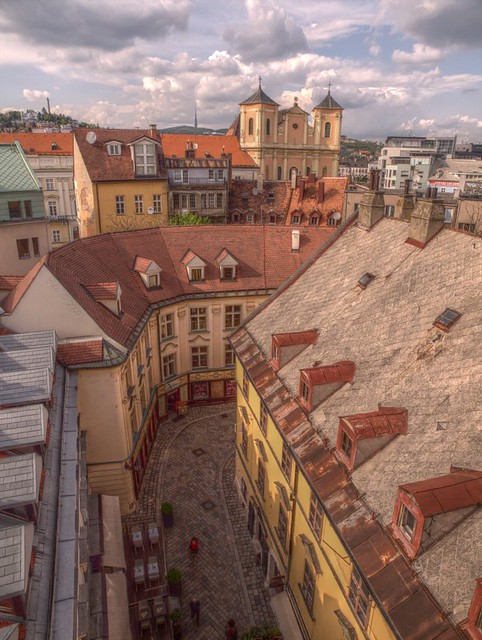
The centre of Bratislava is being redeveloped

A significant urban regeneration project on a 3.5 hectare site at the very center of the inner city core of Bratislava.

Kamenne namestie today


Project when completed 2013-4


Location: Bratislava city core
Retail: 60,000 m2
Leisure: 12,000 m2
Office and Hotel: 50,000 m2
Parking: 2, 000 spaces
Cooperation: Tesco
Sector: Mixed use
Completion: 2013/14
Country: Slovakia