Slovakia and the crisis as compared with other Central european countries and balkan countries

The graphs speak for themselves

The Slovak economy was affected by the global crisis but has shown one of the best rates of recovery. Only Poland has fared better, but its huge size makes it both less prone to downturns and more sluggish in upticks. Slovakia is projected to regain a 4% GDP pace this year and next, which is fairly goldilocks.

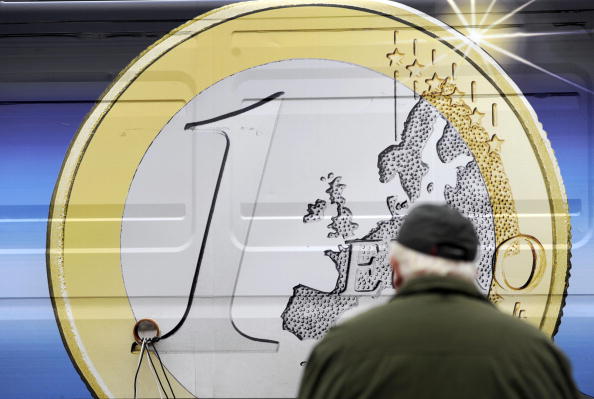
Slovakia is a big beneficiary of the euro and will therefore stay in it forever

Richard Sulik who is mentioned here does not have the power to force his opinion, and anyway he only talking about a plan b should things take an unexpected turn such Germany leaving the euro itself. If one reads his comments in Slovak he is stating the obvious, if the euro's chief instigators ( Germany and France) throw in the towel and decide to give up on being parts of the biggest trading block in the world then Slovakia should prepare for it.

Journalists with not much to write should note that this hypothetical is firmly on pig flying territory. There is an anglosaxon assumption that the Euro and the EU are unecessary so the breaking of the euro is a matter of time back to the natural order of things... Additionally talking to british politicians one gets the impression that deep down they think that it was all a matter of a Helmut Kohl & Miterran love-in in the 1980s and that the future is bright for tiny countries with mercantilist policies. This thinking is ofcourse deluded and a product of lazy economic nationalism, self interest disguised as idealism, breathtaking arrogance, and a short termism that diplomatically has led Britain to now have the smallest influence in europe in its entire history. As the small print says in all that rubbish investment products sold in UK banks "past performance does not guarantee future returns". The world where the UK could exploit vast swathes of the world because of the primitiveness of the natives are over. The world is now more sophisticated and massive trading blocks are emerging, and you better be part of one of them. Slovakia's establishment has understood that and is integrating into the most viable scheme possible to address the globalising challenge. To put it in other words, even if the euro were to fail, it would be replaced by a successor!

Things would have to get massively worse for the euro to be a liability rather than an advantage for Slovakia.
For this small country this border/labour/monetary (and in the future possibly even fiscal) union with Germany is of strategic importance, as it is for other small fiscally conservative nations dotted around germany, such as the Netherlands, Denmark, Finland, Czech republic, and not least Austria. All these nations share common values and high Human Development Index as well as raw GDP performance.

Additionally under the EU, schengen, and euro umbrella, Slovakia has redressed the economic isolation that came about from the iron curtain and the nationalisms of the 30s and 40s. Membership of this Neo-Austrohungarian economic zone, Czechs, Austrians etc is powering the economy and integrating it in big infrastructure investments that will further entrench these ancient economic links.

Economic integration under the euro is not an ideology or due to romantic visions of internationalism, but because globalisation is making this a necessity. If there are countries that at some point reintroduce currencies, they will have lost in the challenge of the emerging competitors (China, India) and will face a deflationary path to irrelevance and further nationalism. One has to only look at states with independent currencies and with no european perspective. It reads like a list of basket-cases in europe that are going nowhere (Moldova, Serbia, Montenegro, Albania, Ukraine) So the answer to the article is probably that Slovakia would probably the least likely state to leave the Euro.

The real question also is why so much focus on the euro and so little attention is paid to the printing presses of the dollar?? That is far more newsworthy..

s

Should Slovakia quit the euro?

December 13, 2010 4:02pm | 

Slovakia is the newest member of the euro, and as the common currency lurches from crisis to crisis, there seem to be increasing doubts in Bratislava as to the wisdom of accession. (actually the epicenter of the debate is why the club is bailing out wayward members that are richer than slovakia). 
The qualms come from Richard Sulik, the speaker of parliament and leader of the SaS party, a new grouping that is part of the centre-right governing coalition. In an article for the Hospdarske Noviny newspaper, Sulik denounces the policies that got Greece and Ireland into trouble, and looks fearfully at the potential threat facing Spain and Italy. In response, he says Slovakia should come up with a “Plan B” and contemplate reintroducing the koruna.
Sulik, a self-made millionaire who made his fortune in setting up a chain of copy shops, was a member of the team that helped create the Slovak economic miracle more than a decade ago by introducing flat taxes and slashing bureaucracy.
Finance minister Ivan Miklos, himself a key player in those reforms, has a different view: everything possible should be done to keep the euro strong.
Slovakia was initially thrilled to be spared the turmoil felt by its central European neighbours when the economic crisis hit the region. Flush Slovaks went cross-border shopping to Poland and Hungary in 2009 to spend their euros in countries where the national currency had plummeted in value. Foreign investors like Volkswagen were also pleased because they no longer faced currency risk in Slovakia, but still had access to much cheaper workers than in Germany.
However, Slovakia baulked at paying €800m ($1.1bn) to bail out Greece, and now faces the prospect of more demands as other peripheral eurozone countries fall into trouble.
“I think that it reflects a general frustration of the Slovak government,” says Lars Christensen, emerging markets analyst with Danske Bank. “The feeling is that when you join a club you should follow the rules, and not pay for the people who have broken the rules.”
Next door meanwhile, the Czech Republic, never an enormous euro enthusiast, has made it clear that it is in no rush to join the common currency.
“Nobody can force us into the euro,” Petr Necas, the prime minister, said recently, while Vaclav Klaus, the Eurosceptic president, has asked the government to work out if it can renege on the promise made to eventually adopt the euro when the Czech Republic joined the EU in 2004.

The new British prime minister is politically small-minded and lacking in substance. So much for the special relationship.

Britain under Tony Blair sacrificed men to fight in iraq in a big way, the UK has been supporting everything emanating from the US, with a fervour that can only be attributed to the UK getting something fairly substantial out of the "relationship".

Alas it seems that the nature of the UK's relationship with the USA seems to fundamentally be akin to that of a naive groupie and an ageing rock star... Love or commitment do not seem to be working both ways but it seems that now not even kind words are in the offing. What was the success of Tony Blair then??? the economy was a massive destructive bubble, and now accoriding to wikileaks:

David Cameron, Brown's successor as the guardian of British-American relations? The new British prime minister, American diplomats reported after a conversation with a high-ranking British banker, was politically small-minded and lacking in substance.

The only thing that can help this situation is European humility. British foreign minister, William Hague, has said: "The world has changed and if we do not change with it, Britain's role is set to decline." The new coalition in London now avoids using the term "special relationship."

well that didn't last long... and nothing of substance was gained. So why oh why is Tony Blair going around and pretending to be a great ex-statesman? He is a failed salesman that has fallen for his own pitch...

Bratislava has a new mayor

Bratislava has elected Milan Ftacnik as its new mayor.

He is by most accounts a modern person with an engineering background.
he just so happens to look like this however :)

the fear...

A song for our times...

I want to be rich and I want lots of money
I don't care about clever I don't care about funny
I want loads of clothes and fuckloads of diamonds
I heard people die while they are trying to find them

And I'll take my clothes off and it will be shameless
'Cuz everyone knows that's how you get famous
I'll look at the sun and I'll look in the mirror
I'm on the right track, yeah I'm on to a winner

I don't know what's right and what's real anymore
And I don't know how I'm meant to feel anymore
And when do you think it will all become clear?
'Cuz I'm being taken over by the Fear

Life's about film stars and less about mothers
It's all about fast cars and cussing each other
But it doesn't matter cause I'm packing plastic
And that's what makes my life so fucking fantastic

[ Lily Allen Lyrics are found on www.songlyrics.com ]
And I am a weapon of massive consumption
And its not my fault it's how I'm programmed to function
I'll look at the sun and I'll look in the mirror
I'm on the right track, yeah we're on to a winner

I don't know what's right and what's real anymore
And I don't know how I'm meant to feel anymore
And when do you think it will all become clear?
'Cuz I'm being taken over by the Fear

Forget about guns and forget ammunition
'Cuz I'm killing them all on my own little mission
Now I'm not a saint but I'm not a sinner
Now everything is cool as long as I'm getting thinner

I don't know what's right and what's real anymore
And I don't know how I'm meant to feel anymore
And when do you think it will all become clear?
'Cuz I'm being taken over by the Fear


© Emi Blackwood Music Inc.;Tucano Music;Universal Music Publishing

On modern food

this is a fascinating video i am sure will stay with you next time you go to the supermarket

Essential reading on what is going on in Bratislava and Vienna (Wien)

The Month of Photography Bratislava is organized as part of the European Month of Photography in Paris, Vienna, Berlin, Roma, Moscow, Luxembourg and Bratislava.
 

Links

  • 20TH MONTH OF PHOTOGRAPHY BRATISLAVA - programme [PDF, 589 kB]
  • http://www.sedf.sk
    More information about the programme


    BHS – festival of returning performers and new discoveries

    BHS
    46th Annual Bratislava Music Festival (BHS), 19. 11. – 6. 12. 2010.
    Even the most perfect recording won’t replace moments when music is being born, created in the harmony between the artist and the audience. That’s why – year after year – classical music fans await the Bratislava Music Festival. The forty sixth annual festival will once again take place between November and December. The programme will include big name artists and orchestras from 25 countries: it will be a festival of returning performers and new discoveries.


    Ľubica Orgonášová is a Slovak soprano who owns the world stages. The concert at the BHS will celebrate her return after 30 years and the audience will discover that her interpretation of Mozart is without competition. She will perform with Camerata Salzburg.
    A different flavour in Bratislava will be the return appearance of conductor Valery Gergiev with the Mariinsky Theatre Orchestra. This magician has been marked as the most exciting talent on the stage in recent years and the richness in colour of his orchestra has no match. Some can recall that as a young man at the beginning of his starry career, he stood on the Reduta stage in 1980.
    BHS is also a parade of world renowned orchestras: The Czech Philharmonic, The Hague Philharmonic, Budapest Festival Orchestra or the Krakow Philharmonic – with conductors Ken Ichiro Kobayashi, Neeme Järvi, Iván Fischer or Pawel Przytocki. Of course, it is an opportunity to welcome orchestras with an exotic flavour: The Armenian Philharmonic recently had great success at the BHS; let’s believe that this will be repeated. The World Expo in Shanghai inspired festival organisers to introduce the culture of this city here – for the first time, the Chinese Shanghai Philharmonic will visit the BHS with conductor Mahai Tang, whose artistic career started with Herbert von Karajan himself and with pianist Mélodie Zhao, who won Hummel’s Piano Competition in Bratislava.
    Once again, excellent soloists will perform at the BHS: pianists Piotr Paleczny, Pavel Gililov, Henri Sigfridsson, Jenö Jandó, Emmanuel Ax, Mikuláš Škuta and Peter Pažický; violinists Václav Hudeček from the Czech Republic and Slovak Dalibor Karvay; cellists Frenchman Gautier Capuçon as well as the famed Italian, Giovanni Sollima. An evening of stars is promised by the Bratislava and world famous duo: Vadim Repin – violin, Boris Berezovskij – piano.
    It must be mentioned that the BHS is acknowledging the Belgian EU presidency and has therefore invited Flemish ensemble, Anima Eterna, with the ever fresh Monteverdi’s madrigals. Since Slovakia has presidency of the Vysehrad Four, a concert is being prepared in which pieces from composers from all four countries will be heard, interpreted by artists from the V4 countries.
    Apart from foreign artists, the Slovak Philharmonic, Slovak Radio Symphony Orchestra, ŠKO Žilina and the Bohdan Warchal Chamber Orchestra, celebrating 50 years of existence, as well as other artists, will perform at the BHS.
    Audiences will certainly enjoy listening to pieces from big names whose anniversaries we are commemorating: 200 years since the birth of the darling of the Warsaw and Paris salons and the genius of romanticism, Fryderyk Chopin, as well as Robert Schumann, who worshiped the joining of music and poetry. Audiences will also be able to appreciate a master whose works are full of dazzling effects together with great pain - the excellent Gustav Mahler, who was born 150 years ago.
    Once again this year, part of the Bratislava Festival will be the international stage of young interpreters, New Talent – SPP Foundation Award – this is a platform for discovering talent and presenting new artists, future great personalities in the music world.

    (ip)
    More detailed information at:
     

The president of the EU says euroscepticism leads to mercantilistic trade and foreign policy and eventually to war

The president of the EU says euroscepticism leads to mercantilistic trade and foreign policy and eventually to war.

Mr Van Rompuy linked hostility to the EU, and the idea that countries could leave the Union, to a revival of aggressive nationalism.

"We have together to fight the danger of a new Euroscepticism. This is no longer the monopoly of a few countries," he said. "In every member state, there are people who believe their country can survive alone in the globalised world. It is more than an illusion: it is a lie."

The controversial comments made on Tuesday come less than a fortnight after David Cameron, the Prime Minister, declared that he was a Eurosceptic after his gruelling Brussels summit battle to block a sharp increase in the EU budget at a time of national austerity.

On China and its rise

China wants a unipolar asia with itself as the leader. To this end it has facilitated a nuclear armed unstable country in the neighbourhood of ALL its major potential adversaries. N Korea to pin Japan,Pakistan to pin India(It also claims a Japanese island and an entire Indian state as its territory) and now a nuclear Iran to pin the US in the middle east.While it carries on a relentless mercantalist expansion of its economy for another decade.

To say nothing of its blatant supression of dissent and free speech including locking up of this years nobel laureate.

The real question is why many people in power in both US and EU seek to aid and facilitate this development when it is clearly not in the interests of our countries especially in the long term.

China shows no signs of a country that wants to emerge peacefully.

On infectious greed as a development model...

One of the leading lights in the current government of Slovakia opined that Slovakia should attempt to become more like singapore or hong kong, a small extremely liberal enclave in the wider market of the EU and eurozone.

The allure of places like this should be tempered by the following facts.

  1. they are usually accidents of history and are usually not countries proper (this is true of both Hong Kong and Singapore)
  2. They have massive economies right next to themselves, and the rich of these countries usually uses these territories as a place to hide their money from taxes.
  3.   ermm.. this... http://video.ft.com/v/621971804001/Hong-Kong-s-property-extremes-cage-the-poor

Wall Street Journal interviews Slovak Prime Minister Iveta Radicova on the reasons why Slovakia refuses to bail out Greece with further loans

Wall Street Journal interviews Iveta Radicova on the reasons why Slovakia refuses to bail out Greece with further loans


http://online.wsj.com/video/slovak-pm-wants-rules-on-defaults-for-euro-area/27574DAA-D4C6-4FE8-B835-89E4A58BDE29.html 

Iveta Radicova is clearly an intelligent leader, and she explained that Slovakia is participating in an Eurozone insurance policy for the protection of the euro due to unforseen and unavoidable future circumstances.

However she politely suggested that the greek situation is not justifiable as a bailout, because it was hardly an unavoidable situation and that the indirect beneficieries of such bail-outs (often rich investors and banks) need to accept the risk of their investments and the tax payer cannot be there to pick up the pieces if the investor does not do their due dilligence. This is a point made by several economists over the years when bailouts started with Asia & Mexico under Clinton.

In other words the PM of Slovakia noted her and her country's aversion to a development model largely based on ever increasing borrowing. She expressed her solidarity with the greek people but not with the practices of their governments in the last 20-30 years in relation to debt.

This is not just words, Slovakia has a tiny national debt as a % of GDP which is even smaller than Finland and about half that of Germany at around 35%, moreover this is likely to decline further. One cound say that Slovakia is a very debt averse country culturally, and seems to be baffled by the prevalence of the credit card and other forms of indebtedness in the anglosaxon world.

The Slovak Prime Minister called for stronger regulation of euro-zone financial markets and for allowing overly-indebted countries to undergo and orderly default rather than throwing them new credit lifelines.

Earlier this year Slovakia, the newest and poorest of the 16-rich-nation currency group, caused a stir around Europe when it refused to be part of a EUR110 billion bailout for Greece, agreed on in May by euro-zone member countries and the International Monetary Fund. However it should remembered that Slovakia's share is fairly small as it is a small country of only 5 million people.